 Image 1 of 2
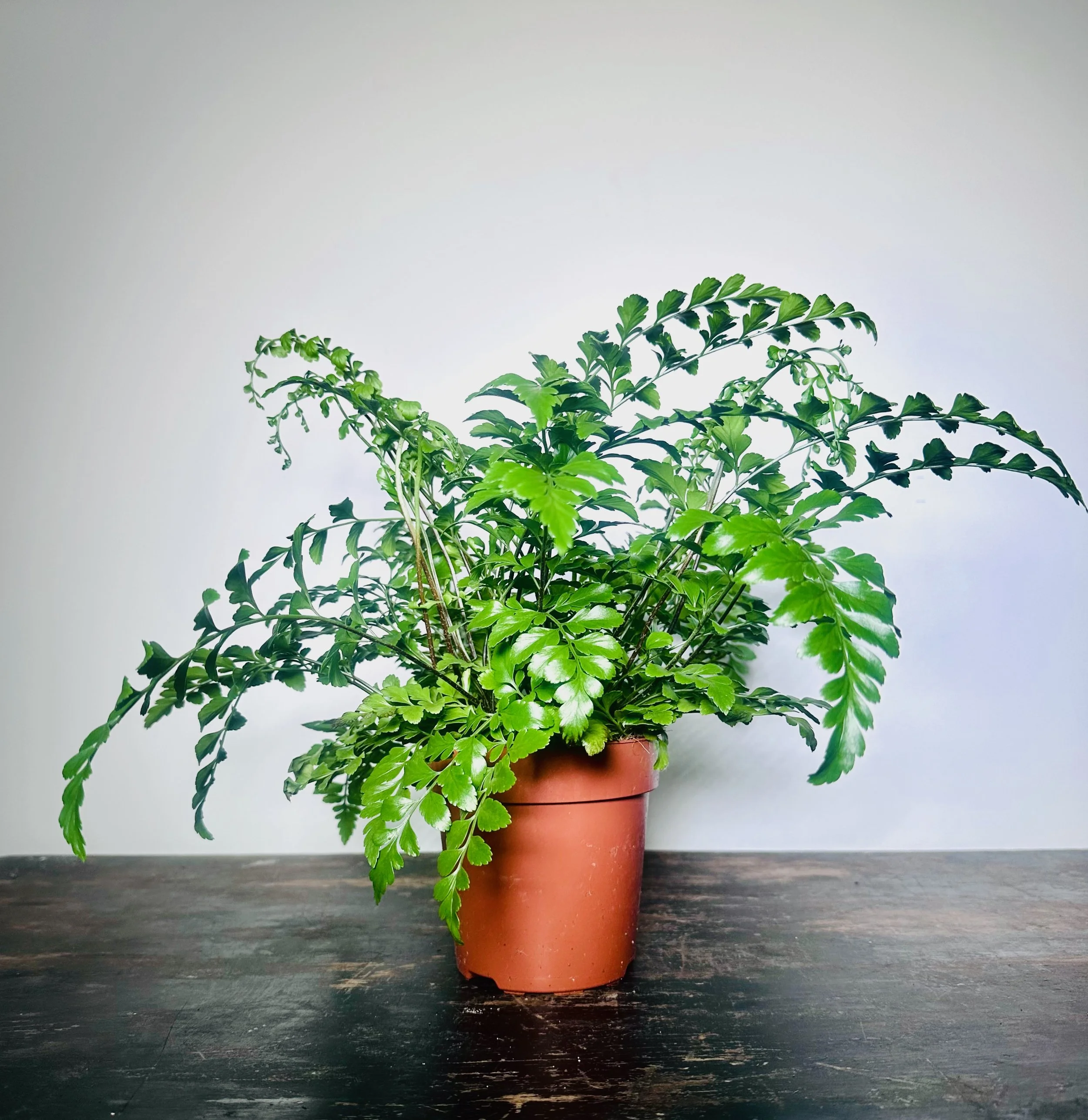 Image 2 of 2
Family - Aspleniaceae
Asplenium ferns are native to tropical forests of the East Africa, Japan, Australia and the Pacific islands
Growing as epiphytes in the wild, their outwardly spreading roots anchor themselves within nooks and crannies of trees and rocks, soaking up oxygen and moisture.
This is a cultivated hybrid form created in Australia, between Asplenium dimorphum x A. difforme, both endemic to the Norfolk islands in the Pacific
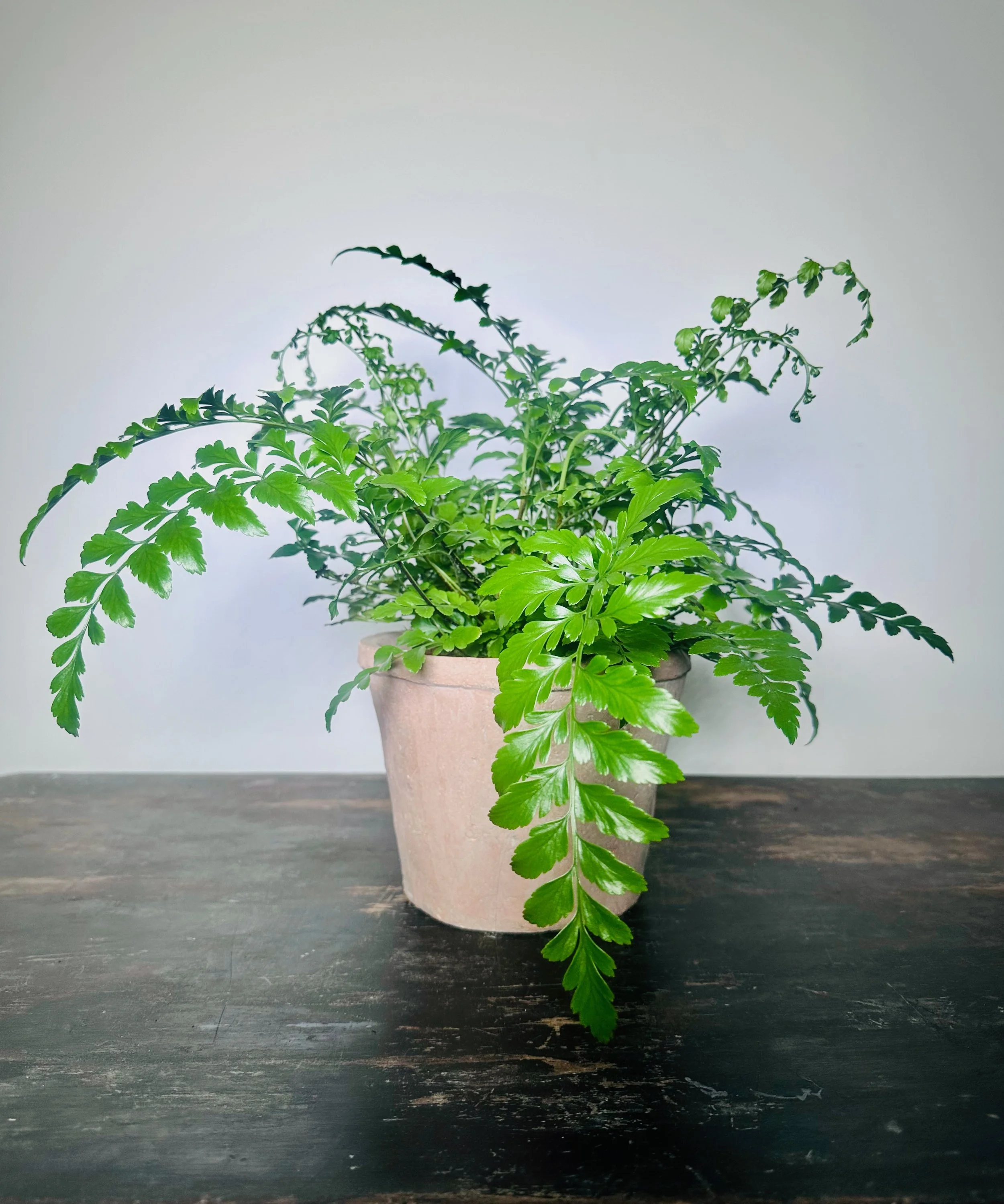
A beautiful and very robust fern with dissected fronds, setting it apart from other members of this genus. The fronds are a mix of sterile and fertile each sporting their own distinguishable form, the latter being more narrow feather like.
The waxy coating helps this fern to conserve water making it more tolerant of lower humidity or forgetful watering
Position - a warm spot in bright but dappled / filtered light. Direct sun may scorch the leaves. Avoid proximity to heaters and drafts
Water - regularly enough to keep the root ball consistently moist but not soggy. The surface can be allowed to slightly dry before watering again. Water evenly around the plant avoiding the centre and discard any excess that flows out of the base. Do not leave the pot sitting in water as this will lead to root rot
Humidity - Ferns love humidity so a bathroom is ideal. Placing the pot on a tray of damp gravel will help. Misting is an option but only lends temporary humidity
Feeding - Ferns are not heavy feeders but an application of a balanced feed 3 or times between spring and autumn will give it a nourishing boost
Ideal Temperature - 18°C and 24°C (65°F and 75°F).
Repotting - only when necessary using an aerated, free draining mix of bark, coir and perlite. A shallow pot is ideal as roots radiate outwards
This is in a 12cm nursery pot. You will receive a plant similar to the one in photo
Family - Aspleniaceae
Asplenium ferns are native to tropical forests of the East Africa, Japan, Australia and the Pacific islands
Growing as epiphytes in the wild, their outwardly spreading roots anchor themselves within nooks and crannies of trees and rocks, soaking up oxygen and moisture.
This is a cultivated hybrid form created in Australia, between Asplenium dimorphum x A. difforme, both endemic to the Norfolk islands in the Pacific
A beautiful and very robust fern with dissected fronds, setting it apart from other members of this genus. The fronds are a mix of sterile and fertile each sporting their own distinguishable form, the latter being more narrow feather like.
The waxy coating helps this fern to conserve water making it more tolerant of lower humidity or forgetful watering
Position - a warm spot in bright but dappled / filtered light. Direct sun may scorch the leaves. Avoid proximity to heaters and drafts
Water - regularly enough to keep the root ball consistently moist but not soggy. The surface can be allowed to slightly dry before watering again. Water evenly around the plant avoiding the centre and discard any excess that flows out of the base. Do not leave the pot sitting in water as this will lead to root rot
Humidity - Ferns love humidity so a bathroom is ideal. Placing the pot on a tray of damp gravel will help. Misting is an option but only lends temporary humidity
Feeding - Ferns are not heavy feeders but an application of a balanced feed 3 or times between spring and autumn will give it a nourishing boost
Ideal Temperature - 18°C and 24°C (65°F and 75°F).
Repotting - only when necessary using an aerated, free draining mix of bark, coir and perlite. A shallow pot is ideal as roots radiate outwards
This is in a 12cm nursery pot. You will receive a plant similar to the one in photo