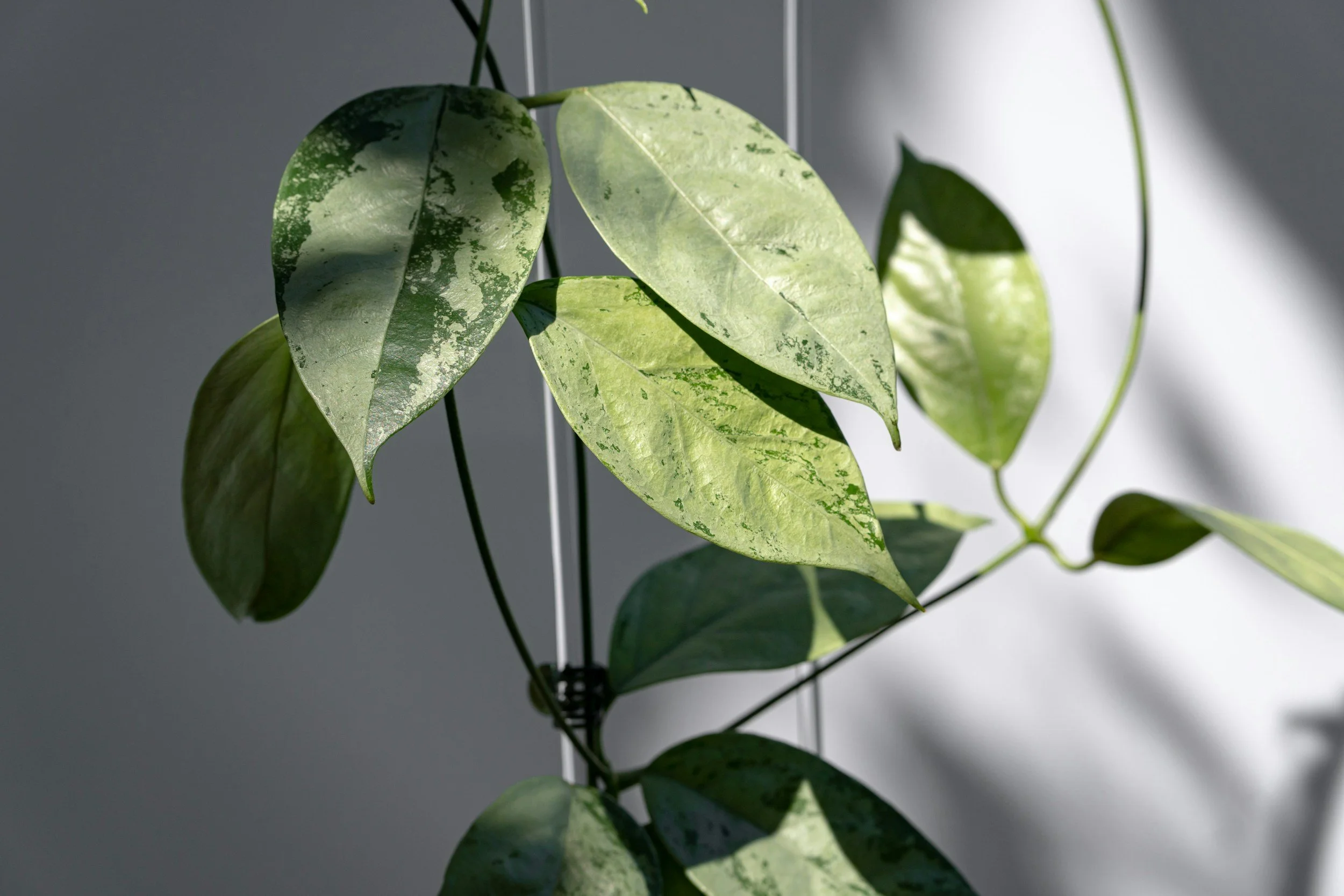
Hoya
The many species of the Hoya genus are native to sub tropical and tropical regions of varying altitudes across Asia and Australia where they grow as epiphytes or lithophytes. Their long stems climb, creep or hang, producing thick fleshy long or round leaves that hold water. Blooms form as a cluster of umbels that hang from a peduncle from the stem. These have a typically waxy, star like appearance producing a sweet nectar
Position - in bright but filtered light, avoiding direct sun on the leaves. A few hours of direct morning sun during the winter will be beneficial. Partial shade is tolerated but they may not flower
Water - during the growing season, allow a third of the soil to dry between waterings, keeping the root system just moist. The leaves and stems can store water. Do not allow pot to sit in water as roots will rot. Water much less in winter, waiting until two thirds has dried out
Feed - from January to March apply a nitrogen based liquid feed. Switch to a potassium based feed until after blooms die off in autumn
- Flowers are encouraged by maintaining cooler temperatures during dormancy in autumn and winter (ideally 10 -14° ) so relocate to a cool bright room if possible
Keeping the plant slightly pot bound and only re-potting every 3 years will also promote their growth
- Hoyas like good air circulation and dislike being kept damp.
- Yellowing or falling leaves, or mould growth on soil surface indicate overwatering
- Flaccid, wrinkly or yellow leaves indicate underwatering
- Check regularly under leaves for mealy bugs, remove these and spray plant with soapy water and Neem oil

“It all begins with an idea. Maybe you want to launch a business. Maybe you want to turn a hobby into something more. Or maybe you have a creative project to share with the world. Whatever it is, the way you tell your story online can make all the difference.”
— Squarespace